
Blog
10 Essential Walk-In Cooler Maintenance Tips to Extend Equipment Life

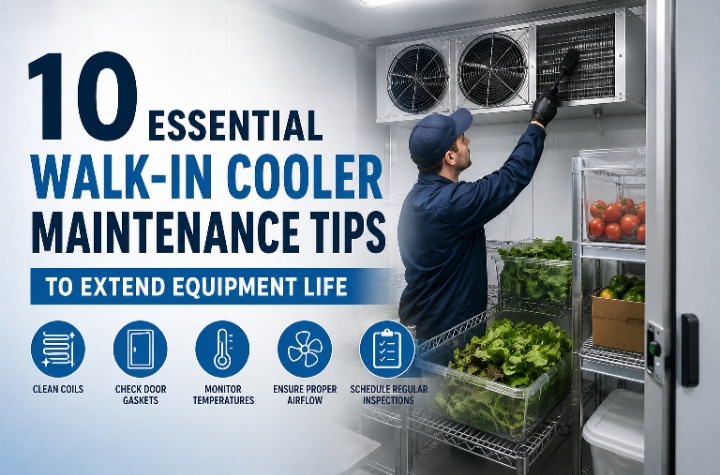
Walk-in coolers are the backbone of restaurants, grocery stores, hotels, and food service businesses across the United States. They work around the clock to keep ingredients fresh, maintain food safety standards, and support smooth daily operations. However, even the best refrigeration systems require regular maintenance to perform efficiently.
Ignoring routine upkeep can lead to higher energy bills, unexpected breakdowns, and costly repairs. The good news is that a proactive maintenance routine can significantly extend the life of your equipment
1. Clean the Condenser Coils Regularly
Dirty condenser coils force your walk-in cooler to work harder than necessary. Dust, grease, and debris restrict airflow, reducing efficiency and increasing energy consumption.
Experts recommend cleaning the coils every three to six months, depending on your environment. Businesses operating in busy kitchens may need more frequent cleaning.
2. Inspect Door Gaskets
Door gaskets create an airtight seal that prevents cold air from escaping. Cracked, loose, or worn-out gaskets allow warm air to enter the cooler, causing temperature fluctuations.
Check door seals regularly and replace damaged gaskets promptly to maintain optimal performance.
3. Monitor Temperature Consistently
Maintaining proper temperatures is essential for food safety. Use calibrated thermometers and monitor temperatures daily to ensure your cooler stays within the recommended range.Unexpected temperature changes may indicate underlying mechanical issues that require immediate attention.
4. Keep Evaporator Fans Clean
Evaporator fans circulate cold air throughout the cooler. Dust buildup can reduce airflow and place additional strain on the system.
Routine cleaning improves cooling efficiency and promotes even temperature distribution.
5. Avoid Overloading the Cooler
It can be tempting to maximize storage space, but overcrowding restricts airflow and forces the refrigeration system to work harder.
Organize inventory properly and leave sufficient space between products to allow air circulation.
6. Schedule Professional Inspections
While daily maintenance is important, professional inspections help identify problems before they become major failures.
Certified technicians can detect refrigerant leaks, electrical issues, and worn components that may not be visible during routine checks.
7. Check Drain Lines
Blocked drain lines can lead to water accumulation, unpleasant odors, and potential safety hazards.
Inspect and clean drain lines periodically to ensure proper drainage.
8. Train Employees on Proper Usage
Employees play a major role in maintaining refrigeration efficiency. Simple habits such as minimizing door opening times and reporting unusual noises can make a significant difference.
Staff awareness helps prevent avoidable wear and tear.
9. Replace Worn Components Promptly
Delaying minor repairs often results in larger, more expensive problems later.
Address issues such as damaged hinges, faulty thermostats, and broken fan motors as soon as they arise.
10. Maintain a Preventive Maintenance Schedule
Creating a documented maintenance schedule ensures that critical tasks are never overlooked.
Preventive maintenance not only extends equipment life but also reduces downtime and protects your investment.
Why Walk-In Cooler Maintenance Matters
A well-maintained walk-in cooler delivers more than just reliable refrigeration. It improves energy efficiency, supports food safety compliance, reduces operating costs, and minimizes unexpected disruptions.
For businesses that depend on refrigeration every day, preventive care isn’t an expense—it’s an investment in operational success.
Final Thoughts
Your walk-in cooler represents a significant investment in your business. Taking the time to perform routine maintenance can add years to its lifespan while improving performance and lowering operating costs.
By implementing these simple maintenance practices, you’ll protect your equipment, keep your products safe, and ensure your business continues running smoothly.